Driving Tips for Better Vehicle Control in Heavy Traffic
Navigating bumper-to-bumper traffic is one of the most stressful aspects of modern driving. Whether it is the daily morning commute or a sudden bottleneck on a highway, congested roads demand a high level of focus, patience, and precise vehicle control. When hundreds of vehicles are packed into a tight space, the margin for error shrinks drastically.
Managing a vehicle effectively in these conditions goes beyond just stepping on the gas and pressing the brake. It requires a comprehensive understanding of spatial awareness, smooth physics transitions, and defensive driving strategies. By mastering specific control techniques, you can reduce wear and tear on your vehicle, lower your fuel consumption, and significantly decrease your risk of a collision.
The Physics of Stop and Go Traffic
To maintain superior control over your vehicle, you must first understand the physical forces at play during heavy traffic. Constant stopping and starting shifts the weight of the vehicle back and forth continuously. When you accelerate quickly, weight transfers to the rear tires. When you slam on the brakes, the weight violently shifts forward, compressing the front suspension and reducing the traction available to the rear wheels.
This continuous weight transfer disrupts vehicle stability and causes rapid fatigue for both the driver and the automobile components. Braking systems overheat, transmission systems work overtime, and tires experience uneven friction. Smooth inputs are the antidote to these disruptive forces. By treating the accelerator and brake pedals as pressure-sensitive instruments rather than simple on-off switches, you stabilize the chassis and keep the vehicle balanced.
Mastering Spatial Awareness and Following Distance
One of the most common mistakes drivers make in heavy traffic is tailgating the vehicle directly ahead. While it may feel like closing the gap prevents other drivers from cutting in, it actually robs you of the time and space needed to control your own vehicle safely.
The Three Second Rule Expanded
In normal driving conditions, a three-second following distance is recommended. In dense traffic, you should ideally expand this to a four or five-second gap. To calculate this, note when the rear bumper of the car ahead passes a fixed object, such as a signpost or a shadow on the road. Count the seconds until your front bumper reaches that same point.
Maintaining this buffer zone provides several distinct advantages for vehicle control:
-
Reduced Braking Frequency: You can often slow down simply by easing off the gas pedal rather than tapping the brakes.
-
Improved Peripheral Vision: A larger gap allows you to look past the immediate vehicle ahead to spot brake lights three or four cars down the line.
-
Buffer for Errors: If the vehicle behind you is tailgating, your forward buffer gives you space to brake gradually, protecting your rear bumper from an impact.
Proactive Scanning Techniques
When traffic thickens, many drivers develop tunnel vision, focusing exclusively on the license plate directly in front of them. This reactive mindset guarantees late braking and jerky vehicle control. Exceptional control requires proactive scanning.
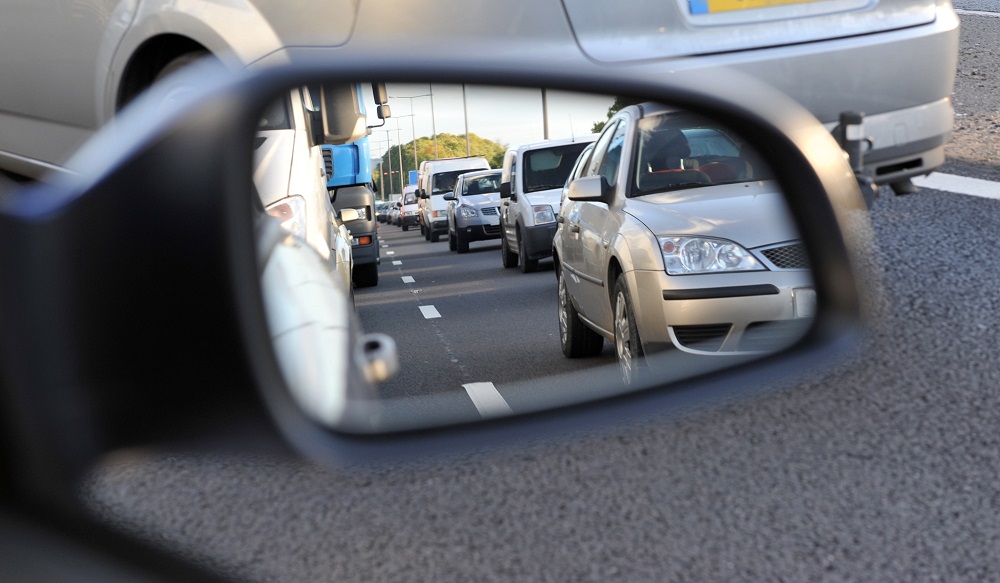
Your eyes should constantly move between three primary zones: the immediate path ahead, the distant traffic flow up to twelve seconds downstream, and your mirrors. By looking far down the road, you can spot the ripples of brake lights before the car directly ahead even reacts. If you see a line of cars slowing down a quarter-mile ahead, you can immediately ease off the accelerator, allowing your vehicle to coast smoothly toward the slowdown rather than rushing up to it and slamming on the brakes.
Smooth Pedal Modulation and Transmission Management
Achieving smooth vehicle control in heavy traffic comes down to how you manipulate the pedals. Abrupt inputs trigger abrupt vehicle responses.
Managing the Accelerator and Brakes
When accelerating from a dead stop, apply progressive pressure to the pedal. Imagine an egg is placed beneath your foot; you want to press down firmly enough to move but gently enough not to crack the shell. This prevents the tires from slipping and minimizes transmission strain.
Similarly, when applying the brakes, use a technique known as progressive braking. Start with light pressure to flash your brake lights and warn drivers behind you, then gradually increase pressure as needed, easing off just before the vehicle comes to a complete stop. This final release of pressure prevents the jarring forward jolt that often occurs at the end of a hard stop.
Transmission Tips for Gridlock
If you drive an automatic vehicle with a dual-clutch transmission or a manual vehicle, heavy traffic requires extra care. Constant creeping at very low speeds causes clutches to slip continuously, creating extreme heat. Instead of letting the vehicle creep forward inch by inch, wait for a substantial gap to open up before moving forward cleanly and engaging the clutch fully.
Lane Selection and Direct Maneuvering
The urge to constantly switch lanes in a desperate attempt to find the fastest moving line is a major contributor to traffic accidents. Frequent lane changes require rapid acceleration, sharp braking, and tight steering inputs, all of which compromise vehicle control.
Pick a lane and stay in it as much as possible. The center lanes are typically the most stable during heavy highway traffic, as the right lane experiences constant disruptions from merging and exiting vehicles, while the left lane often suffers from aggressive tailgating. When you absolutely must change lanes, signal early, check your blind spots thoroughly, and execute a smooth, diagonal drift rather than a sharp turn. This keeps the vehicle balanced and gives surrounding drivers time to adjust their speed.
Managing Driver Fatigue and Psychological Elements
You cannot maintain physical control over a multi-ton vehicle if you have lost control of your mental state. Stress, anger, and fatigue directly manifest as aggressive steering, hard braking, and poor decision-making.
Keep your posture upright but relaxed. Do not grip the steering wheel with white knuckles; a tight grip reduces steering precision and induces arm fatigue. Keep your hands at the nine-and-three positions to allow for maximum leverage and quick micro-corrections. Keep the cabin temperature cool, and use breathing exercises to maintain a calm, detached mindset regarding the delay. Accept that you cannot control the traffic flow, but you can control your vehicle within it.
Advanced Defensive Driving Tactics for Gridlock
Defensive driving is elevated to an art form in heavy traffic. You must anticipate the poor decisions of others before they happen.
-
Watch the Front Tires: When observing vehicles in adjacent lanes, watch their front tires rather than their body panels. The tires will turn noticeably before the vehicle actually crosses the lane line, giving you a split-second head start to adjust your position.
-
Escape Route Awareness: Always maintain an escape route. When stopped behind a vehicle, make sure you can see their rear tires touching the pavement. If that vehicle stalls or a rear-end collision looks imminent from behind, you will have enough steering clearance to pull out and bypass the obstacle without backing up.
Vehicle Maintenance for Optimal Traffic Performance
Your ability to control a vehicle is fundamentally limited by the mechanical health of the machine. Heavy traffic places extraordinary stress on several critical systems.
Critical System Inspections
-
Brake Systems: Worn pads or warped rotors decrease braking efficiency and increase stopping distances dramatically under high temperatures.
-
Cooling Systems: Without the rush of ambient air from highway speeds, your engine relies entirely on its cooling system to prevent overheating during gridlock. Ensure your coolant level is optimal and the radiator fan functions correctly.
-
Tire Pressure: Under-inflated tires increase rolling resistance and degrade steering responsiveness, making quick evasive maneuvers sluggish and unpredictable.
FAQ
How does heavy traffic affect fuel efficiency, and can specific driving techniques improve it?
Stop-and-go traffic drastically lowers fuel efficiency because accelerating a heavy vehicle from a dead stop requires massive amounts of energy. You can mitigate this by minimizing your use of the brake pedal. By maintaining a large gap ahead, you can coast during brief slowdowns instead of braking, preserving your forward momentum and reducing the need to accelerate heavily from a complete standstill.
Is it safer to keep the foot riding the brake pedal during slow traffic crawls?
Riding the brake pedal by resting your foot lightly on it is highly discouraged. This generates continuous friction, which overheats the braking components, warps the rotors, and accelerates pad wear. Furthermore, it keeps your brake lights illuminated constantly, which confuses drivers behind you and makes it impossible for them to know when you are actually attempting to slow down.
Should I turn off my engine if traffic comes to a complete standstill on the highway?
If you anticipate that the traffic standstill will last for more than one or two minutes, turning off the engine is highly beneficial. Modern vehicles consume significant amounts of fuel while idling, and idling for prolonged periods can contribute to engine heat buildup. However, only do this if you are certain traffic will not move suddenly, and ensure your auxiliary power remains on so your hazard lights work if necessary.
How do I handle an aggressive tailgater when I cannot speed up due to heavy traffic?
When stuck ahead of a tailgater in gridlock, do not tap your brakes to warn them, as this increases collision risks. Instead, increase your own following distance with the vehicle ahead of you. By creating a larger cushion in front, you give yourself the ability to brake slowly and gently whenever the flow stops, which forces the tailgater behind you to slow down gradually as well.
What should I do if my engine temperature gauge begins to rise while stuck in a traffic jam?
If your temperature gauge climbs toward the red zone, immediately turn off your air conditioning system to reduce engine load. Turn your vehicle heater on to its maximum temperature and highest fan speed settings. This pulls excess heat away from the engine block and into the passenger cabin. If the temperature continues to rise, pull over to the shoulder safely and turn off the engine completely.
How does rain or winter weather alter vehicle control tactics in heavy congestion?
Precipitation severely degrades tire traction and doubles your required stopping distance. In wet or icy conditions, you must double your following distance to at least eight seconds. Avoid sudden lane changes entirely, as crossing over painted lane markings or slush accumulated between lanes can break tire traction instantly and cause a low-speed spin.